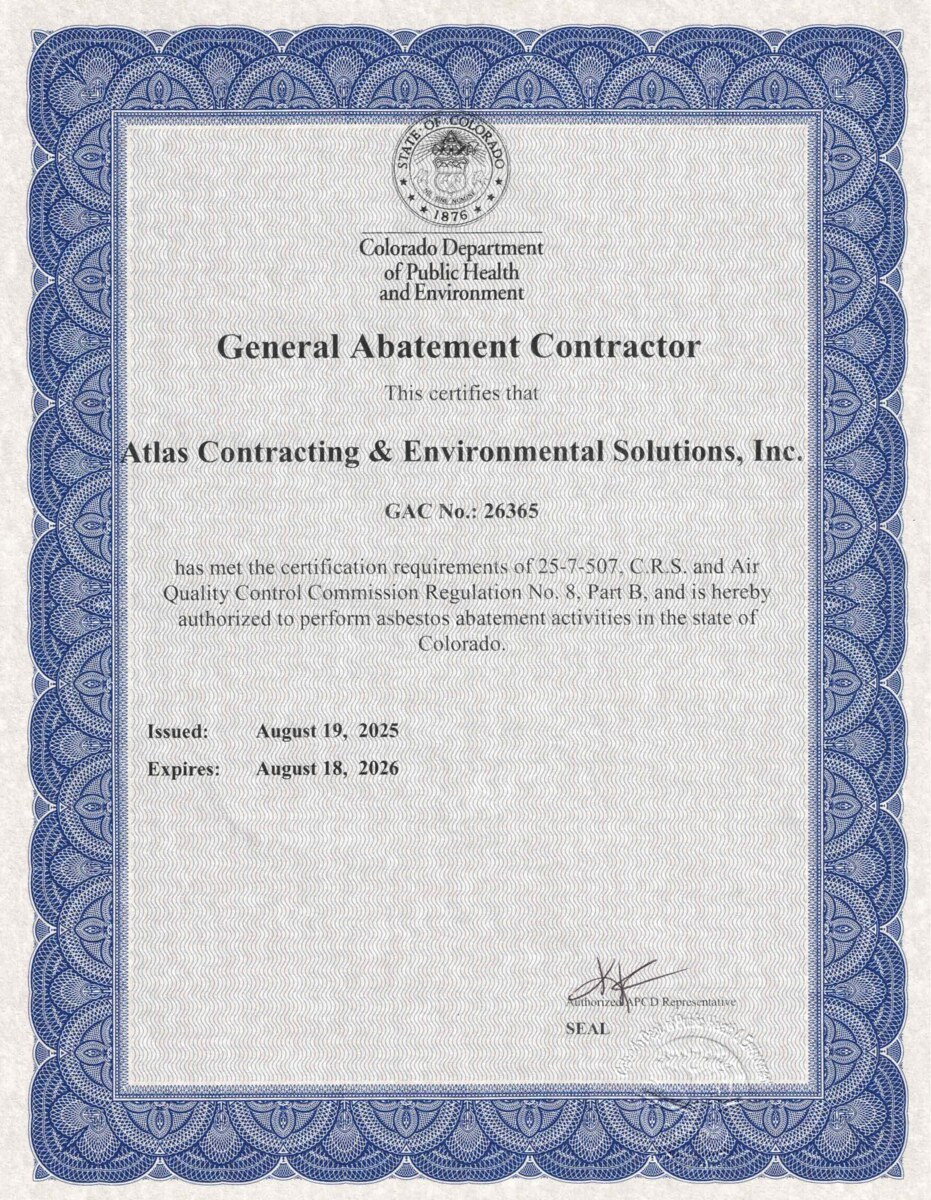
General Abatement Contractor
Colorado CDPHE — GAC No. 26365 · valid through Aug 2026
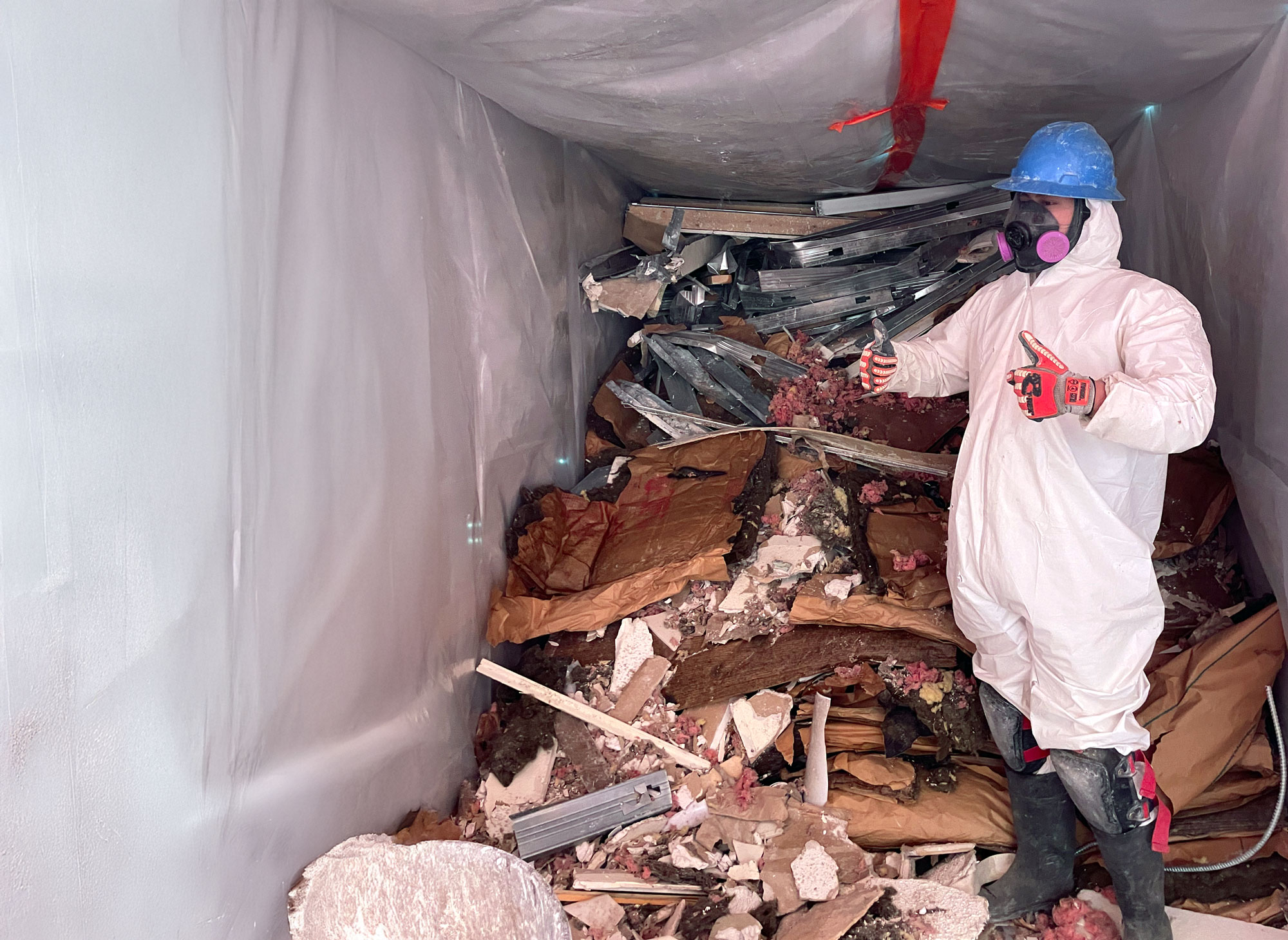
Atlas stabilizes the site, evaluates structural and contamination concerns, and moves into demolition, cleanup, and restoration planning with fewer handoff gaps. Serving Sheridan, Denver, and all of Colorado's Front Range.





Field Documentation
Watch our certified teams execute compliant containment, extraction, and restoration work on active projects. This video demonstrates the professionalism and documentation rigor that backs every scope.
We work with all major insurance carriers












Certifications
These are the trust details that continue to matter in procurement reviews, environmental documentation, and regulated project handoffs.
General Abatement Contractor
Colorado CDPHE — GAC No. 26365 · valid through Aug 2026
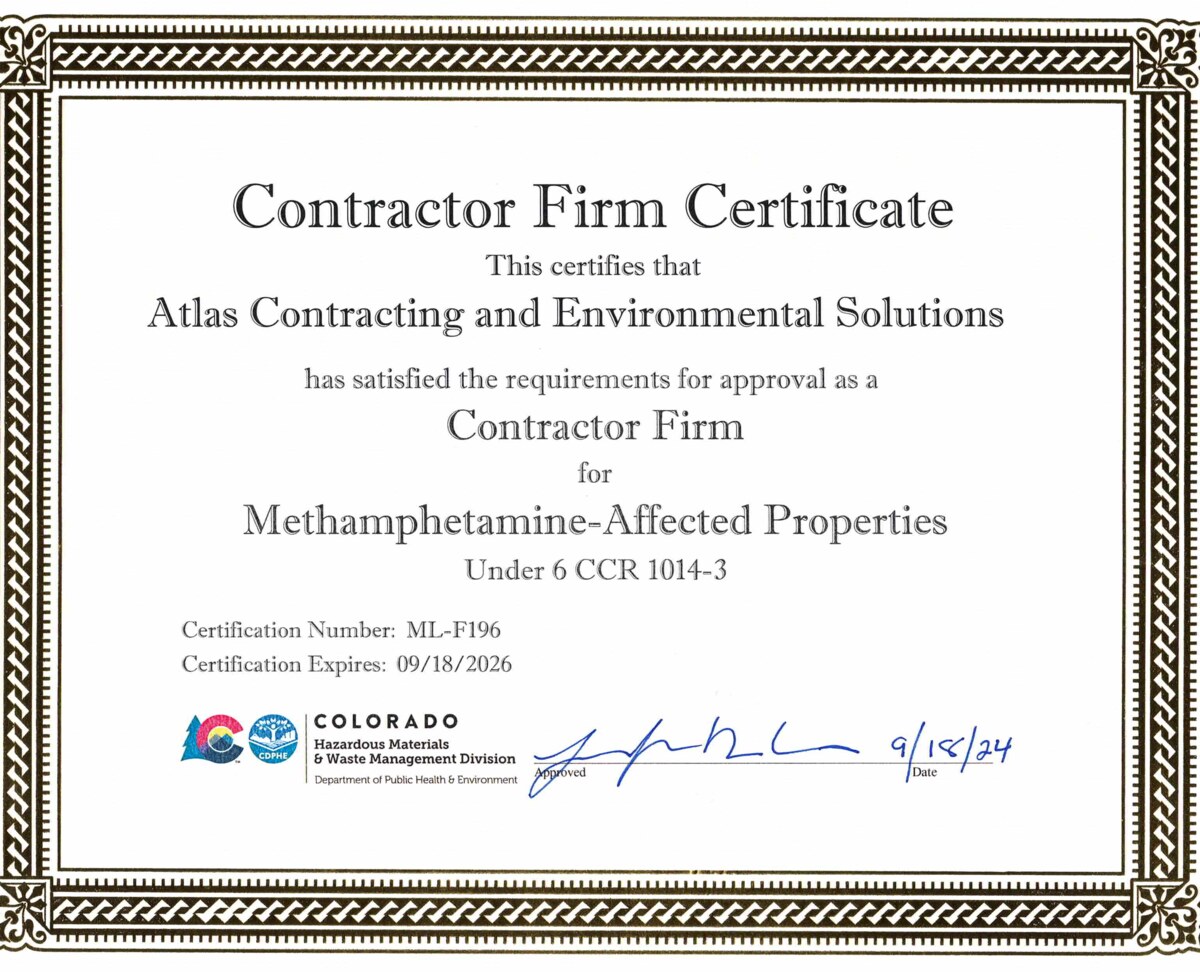
Meth Lab Cleanup
Colorado CDPHE — certified cleanup contractor
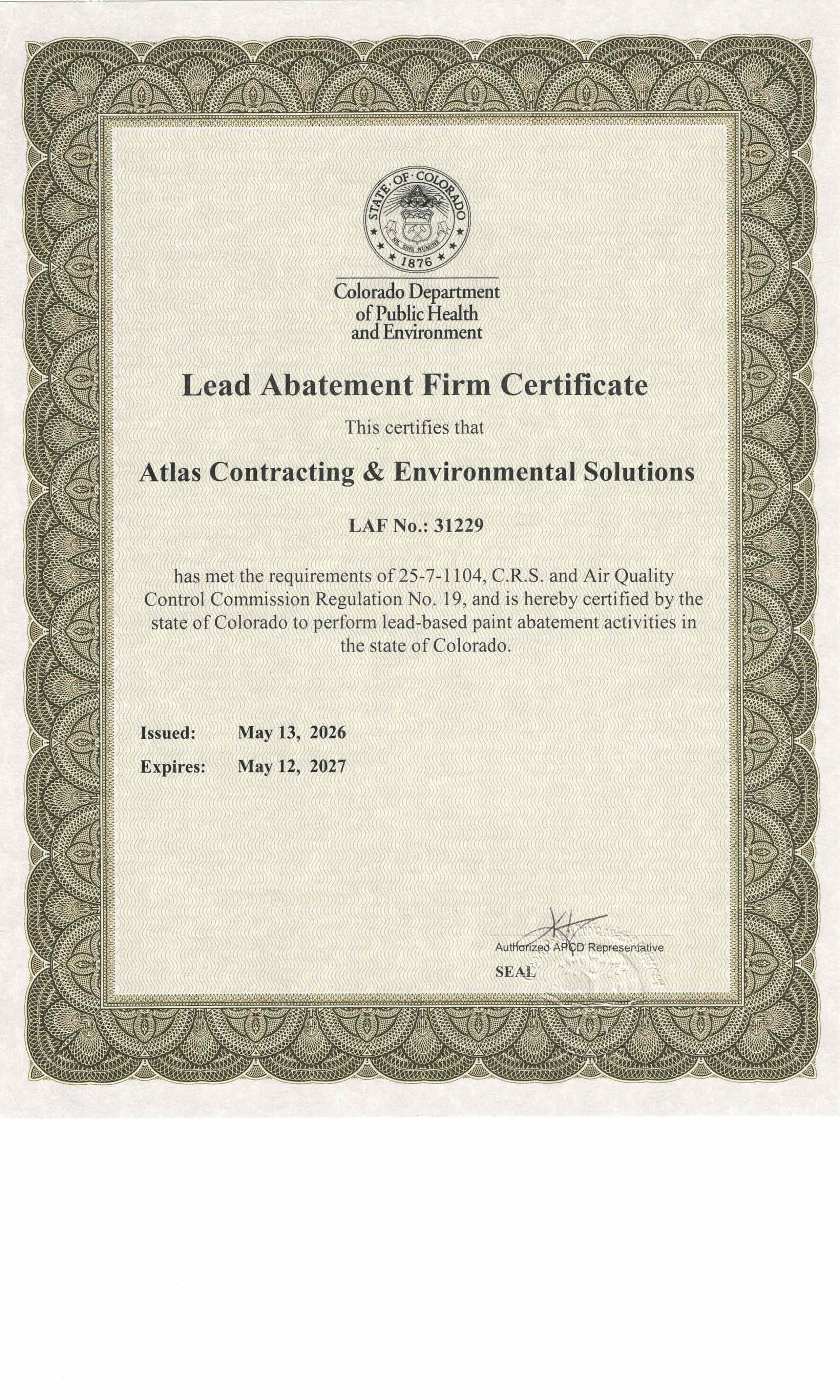
Lead Abatement Firm
Colorado CDPHE - LAF No. 31229 - valid through May 2027
Process
Inspect. Plan. Contain. Remediate. Verify. You get clear steps and documented work — every time.
Site walkthrough, sample collection, written scope of work.
Containment design, disposal pathway, regulator notifications.
Negative-air containment with documented entry/exit protocols.
Certified crews execute under continuous daily documentation.
Final cleanup, clearance testing, project packet for your records.
After a fire, the property often has overlapping problems — char, smoke residue, persistent odor, water from suppression efforts, structural compromise, and sometimes regulated material issues like asbestos or lead paint disturbed by the heat. Atlas is built for that complexity.
Protein residue, synthetic soot, and wood char each require different cleaning chemistry. Atlas identifies the burn type and applies the right combination of dry sponge cleaning, wet washing, abrasive blasting, and HEPA vacuuming to restore salvageable surfaces without spreading contamination to unaffected areas.
Fire suppression often introduces thousands of gallons of water into a structure. Left unaddressed for even 48 hours, this water drives mold growth, warps framing, and saturates insulation. Atlas deploys extraction equipment, dehumidifiers, and air movers alongside fire cleanup crews to prevent a second wave of damage.
Heat weakens steel connections, chars load-bearing lumber, and can crack masonry and concrete. Before any restoration work begins, Atlas performs structural triage to identify compromised members, shore unstable areas, and establish safe working zones — protecting both the crew and the remaining building envelope.
Smoke odor penetrates deep into porous materials — insulation, carpet pad, drywall paper facing, and even concrete. Atlas uses thermal fogging, hydroxyl generators, and ozone treatment to neutralize odor molecules at the source. When materials are too saturated to treat, we remove and replace them rather than attempting to mask the smell.
Fires in older Colorado buildings — especially pre-1978 structures common across Denver, Aurora, and Lakewood — can disturb asbestos insulation and lead paint. Atlas holds EPA Lead-Safe Certification (NAT-F222667) and coordinates abatement alongside fire restoration so both hazards are addressed under one scope, preventing regulatory delays.
Not everything in a fire loss is destroyed. Atlas inventories contents, separates salvageable items for professional cleaning and storage, and documents total losses for insurance purposes. This process runs parallel to structural work, saving weeks on the overall restoration timeline.
Atlas manages fire restoration as a single continuous scope — from the first emergency call through final reconstruction. This eliminates the communication gaps, schedule conflicts, and accountability voids that appear when separate contractors handle each phase.
Within hours of your call, Atlas crews arrive to secure the property. We board openings, tarp compromised roof sections, shut down utilities if needed, and establish containment zones. The site is stabilized against weather, unauthorized entry, and secondary damage while we coordinate with the fire marshal for full access clearance.
Atlas documents every affected area with photos, moisture readings, air quality data, and structural notes. We map smoke and soot migration patterns, identify materials that can be cleaned versus those requiring removal, and flag any hazardous materials disturbed by the fire. This documentation feeds directly into the insurance claim and establishes the restoration scope.
Based on the assessment, we execute selective demolition of unsalvageable materials, clean and treat recoverable surfaces, extract suppression water, and eliminate smoke odor from the structure. Hazardous materials are abated per EPA and Colorado Department of Public Health protocols. Contents are inventoried, packed, and sent for professional cleaning or documented as losses.
With the structure cleaned and decontaminated, Atlas transitions into reconstruction — framing, drywall, electrical, plumbing, HVAC, and finish work. Because our demolition and cleanup crews documented conditions during removal, the rebuild team inherits a clear picture of what was found behind walls and above ceilings. The property is returned to pre-loss condition or better, with final walkthrough and documentation for your insurance carrier.
Residential and commercial fire losses restored by Atlas across Colorado's Front Range.
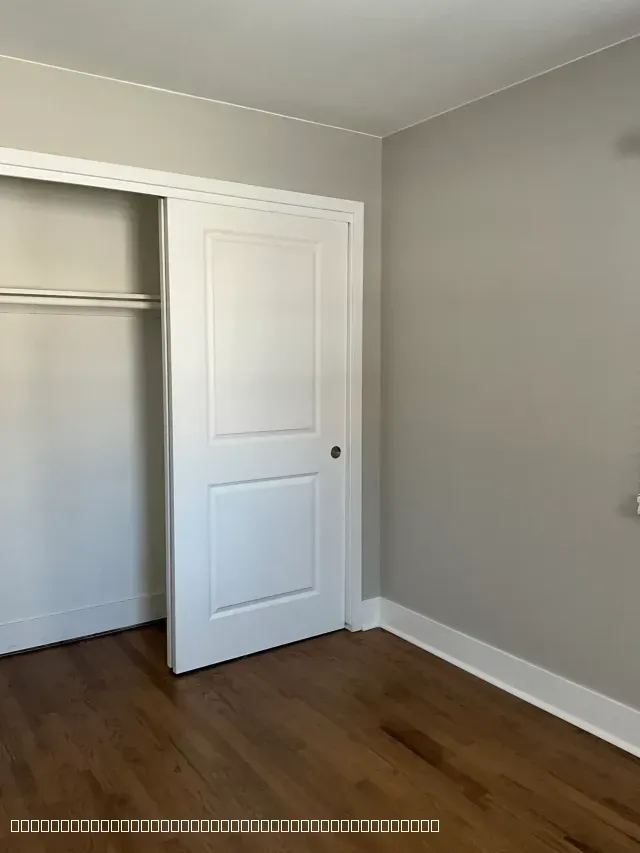
A completed interior restoration project showing a bedroom with freshly painted grey walls, white trim, and polished hardwood floors. A sliding white closet door is partially open, revealing a clean interior. The room appears fully remediated and restored following professional contracting services.
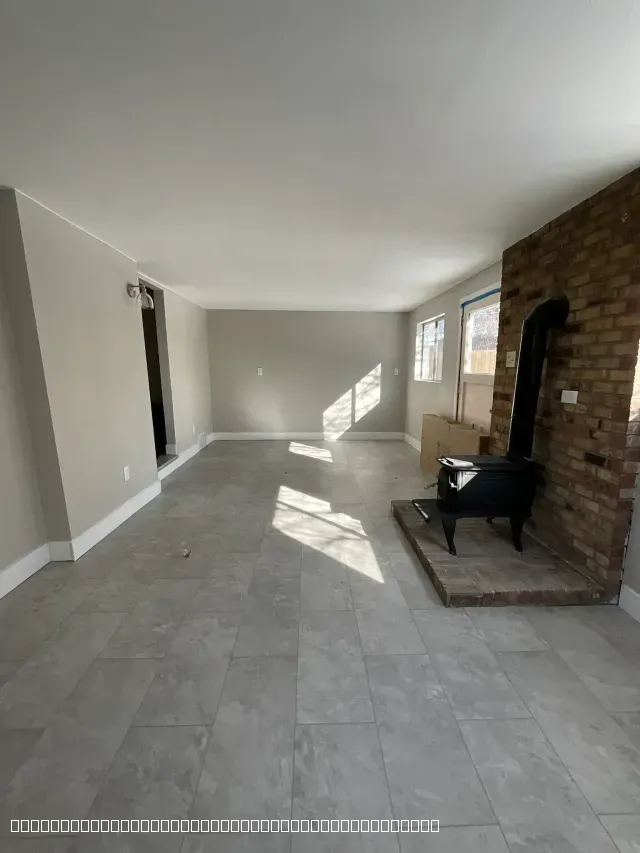
A wide-angle shot of a newly renovated living space featuring large grey floor tiles and freshly painted light grey walls. To the right, a rustic brick fireplace wall houses a black wood-burning stove. Natural sunlight streams in from a window, highlighting the clean finish of the room. The space appears empty and ready for occupancy following professional restoration or remodeling work.
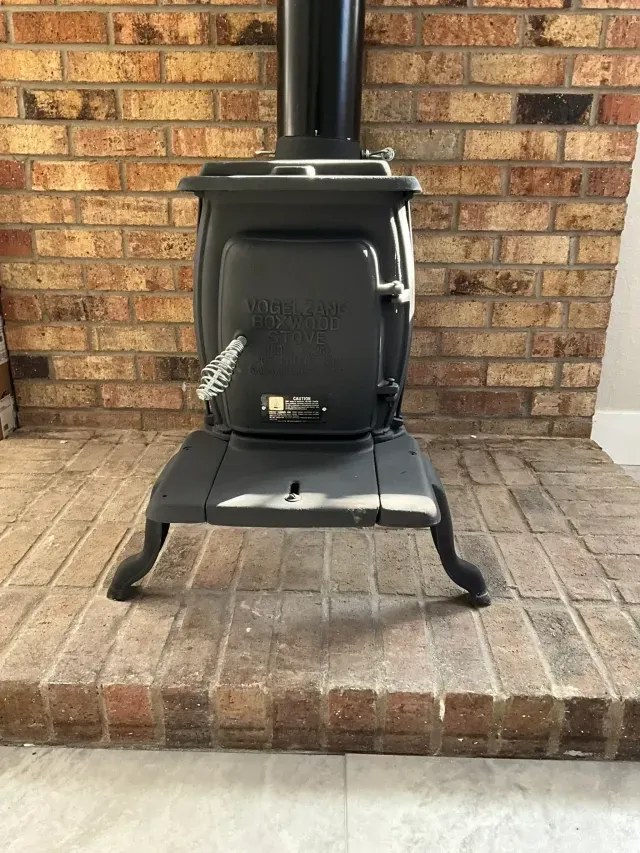
A cast iron Vogelzang Boxwood wood-burning stove is positioned on a raised brick hearth in front of a matching brick wall. The stove features a black finish, a spring-style handle, and a black flue pipe extending upwards. The installation appears complete and clean, situated in a residential interior with light-colored flooring in the foreground.
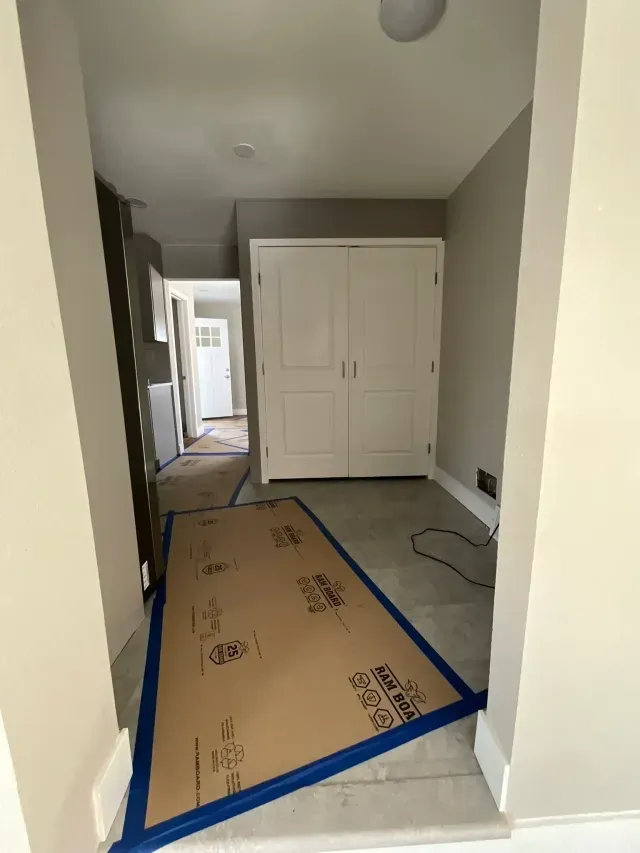
A view through a doorway showing a hallway and room where floors have been meticulously protected with Ram Board and blue painter's tape. This preparation is typical for services like structural and selective demolition or water damage mitigation to prevent damage to existing surfaces during the restoration process.
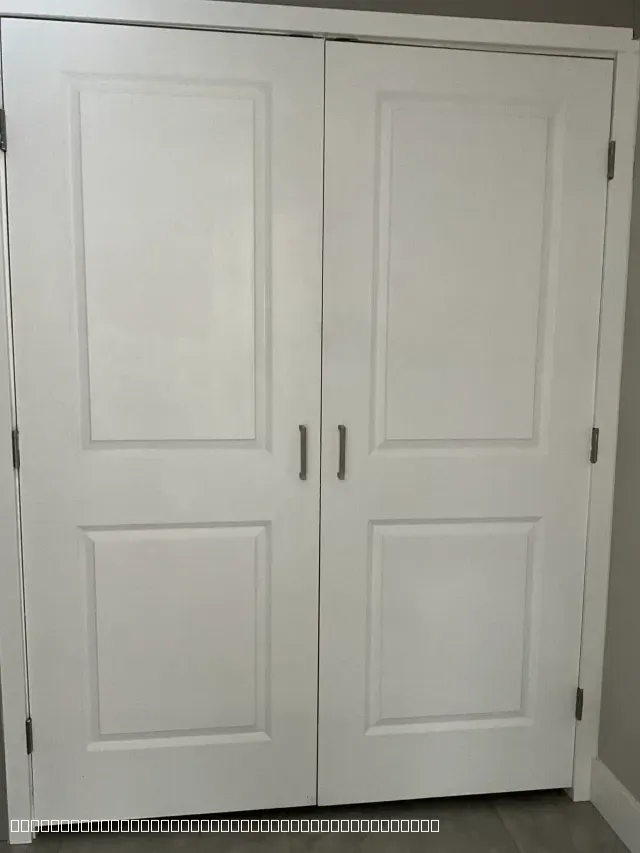
A pair of white, two-panel double doors installed in a closet frame. The doors feature modern silver handles and visible hinges on the outer edges, set against a neutral wall and light-colored flooring, representing a completed interior renovation or restoration project.
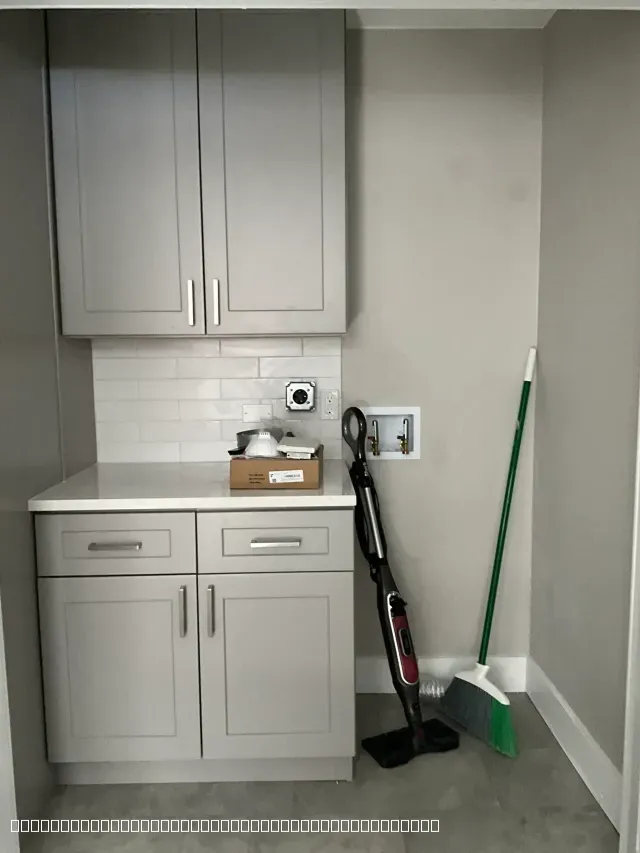
A clean, modern laundry room nook featuring light gray shaker-style cabinets with silver handles. The setup includes a white countertop, a white subway tile backsplash, and a recessed dryer vent and water hookup box. A broom and vacuum cleaner are leaning against the wall in the space designated for appliances, indicating the final stages of a restoration or renovation project.
Most fire losses involve three to five separate contractors — an emergency board-up company, a remediation firm, a demolition crew, a general contractor, and sometimes an environmental abatement specialist. Each handoff introduces delays, miscommunication, and accountability gaps. Atlas consolidates the entire scope under one contract, one project manager, and one timeline.
When one contractor owns the entire fire restoration scope, there are no finger-pointing gaps between the cleanup crew and the rebuild crew. Atlas project managers track every phase from emergency response through certificate of occupancy, and your insurance adjuster has one point of contact for the entire claim. This is especially critical for commercial properties in Denver and Colorado Springs where downtime translates directly to lost revenue.
Fire in a pre-1978 building almost always disturbs lead paint and may expose asbestos. Atlas holds EPA Lead-Safe Certification (NAT-F222667), DUNS 117517457, and CAGE CODE 62FR3 — the federal registrations required for government and regulated facility work. We test, abate, and document hazardous materials as part of the fire restoration scope, not as a separate mobilization that adds weeks to your timeline.
Atlas has managed fire restoration claims with major carriers including State Farm, USAA, Allstate, and Farmers across Colorado. We understand how adjusters scope losses, what documentation they require for supplement approvals, and how to present line-item detail that moves your claim forward without disputes. Our damage documentation is built for the insurance process from day one, not retrofitted after the fact.
Colorado's dry climate, altitude, and temperature swings affect how smoke residue cures, how suppression water migrates, and how quickly secondary mold can establish in a fire-damaged structure. Atlas has restored fire losses across Sheridan, Denver, Aurora, Lakewood, Boulder, Castle Rock, and Colorado Springs — and we calibrate our drying protocols, cleaning chemistry, and reconstruction materials for Front Range conditions, not generic national standards.
Certified professionals who manage every phase of fire recovery — from emergency stabilization through final reconstruction.
Emergency Stabilization & Assessment
Our fire response crews deploy within hours across the Denver metro, Colorado Springs, and the Front Range. Each team member holds OSHA 40-hour HAZWOPER certification and is trained in structural triage, smoke damage assessment, and contamination containment. The team coordinates directly with fire marshals, insurance adjusters, and property owners to establish safe access and begin stabilization before secondary damage sets in.
Cleanup, Demolition & Rebuild
From selective demolition of fire-damaged materials to full structural reconstruction, this crew manages the transition from loss to recovery. They handle soot cleaning, odor elimination, debris removal, and rebuild sequencing — all under one project manager. With experience on residential, commercial, and government fire losses, the crew understands how to keep restoration timelines tight and insurance documentation aligned.
Client Feedback
Real feedback from fire restoration clients across the Front Range.
Brian Haugh
2 months ago
Great crew and fast response
georgina Cordero
7 months ago
Steve and his crew, along with Cassandra were amazing. Steve put me at ease with my situation, he took care of everything. They showed up and worked and did an excellent job.
theresa haskin
11 months ago
We had a roof leak in our kitchen caused by a roofer. Rob came out right away and assessed the issue and worked with myself and the roofer. That day he had made a plan for how the job would go, and began setting up equipment to keep my family safe. He walked me through every step of how the job would go and kept my husband and I informed throughout the process. He made sure that the toddler and newborn in my home would be safe throughout the entire demo process. I cannot recommend this company enough.
Doug
11 months ago
This is an honest place. There are so many disreputable companies out there in this industry, but Atlas is not one of them. Quick work, proper abatement to prevent contamination, and friendly service all come with the fairly priced Atlas contract. Nobody wants to have this work done because it usually means things have gone sideways in your home. That said, if you do, call Atlas Contracting and Environmental Solutions; the company is ACES!!!
One call gets you emergency stabilization, contamination cleanup, and full reconstruction under one contract. No handoff gaps. No wasted time.
Fire losses rarely involve fire alone. Suppression water, smoke migration, and disturbed building materials frequently trigger additional restoration needs. Atlas handles these overlapping scopes under one contract.
Fire suppression introduces massive water volumes. Atlas extracts, dries, and restores water-damaged areas as part of the fire restoration scope.
Suppression water left standing for 48+ hours can trigger mold growth. Atlas monitors moisture levels and remediates mold before it spreads to unaffected areas.
Fire in pre-1978 structures disturbs lead paint. Atlas is EPA Lead-Safe certified and integrates abatement into the fire restoration timeline.
Common questions from Colorado property owners dealing with fire, smoke, and soot losses.
Fire restoration should begin as soon as the site is cleared for safe access by local authorities. Every hour of delay allows smoke residue, soot acids, and residual moisture from suppression efforts to penetrate deeper into building materials. Atlas responds to fire losses across the Denver metro and Front Range within hours, not days — stabilizing the structure, boarding openings, and beginning contamination assessment so the damage does not compound while you wait for next steps.
Yes — but only when the source of the odor is addressed, not just masked. Surface-level treatments and air fresheners do not reach smoke particles embedded in insulation, ductwork, framing cavities, and porous finishes. Atlas uses thermal fogging, hydroxyl generation, ozone treatment, and targeted material removal to eliminate odor at the source. Our EPA Lead-Safe certified crews (NAT-F222667) follow containment protocols that prevent cross-contamination during the cleaning process.
Not without a professional assessment. Fire can compromise load-bearing members, warp steel connections, damage electrical and gas systems, and release hazardous particulates into the air. Atlas performs structural triage and air-quality screening before any occupant or trade crew re-enters the building. We coordinate with local fire marshals and insurance adjusters in Sheridan, Denver, Aurora, and across the Front Range to document conditions and establish a safe re-entry timeline.
Atlas works directly with insurance carriers and adjusters throughout the restoration process. We provide detailed damage documentation, scope-of-loss reports, and photo evidence that align with insurance requirements. Our team has managed fire restoration claims with State Farm, USAA, Allstate, and other major carriers across Colorado, and we understand how to document work so your claim moves forward without unnecessary delays or disputes.
Fire restoration covers the immediate response: stabilization, hazard mitigation, soot and smoke cleanup, odor removal, and salvage of recoverable materials. Reconstruction is the rebuild phase — framing, drywall, electrical, plumbing, and finish work to return the property to pre-loss condition. Atlas handles both phases under one contract, which eliminates the handoff gaps and communication breakdowns that occur when separate contractors manage each stage.
Still have questions?
We're here to help you find the answers.
Atlas responds to fire losses across the Denver metro, Colorado Springs, Fort Collins, Boulder, and the entire Front Range. Our crews deploy from central Denver with equipment staged for rapid mobilization to Sheridan, Aurora, Lakewood, Arvada, Westminster, and surrounding communities.
Mon-Fri 8AM-5PM, 24/7 emergency response available after hours
Emergency dispatch is available after hours for urgent loss events.
Atlas provides emergency fire stabilization, smoke and soot cleanup, hazardous material abatement, and full reconstruction — all under one contract. Call now or request a response online.
Why Atlas
Single-source environmental contractor with regulator-grade documentation, fast mobilization, and a Service Disabled Veteran Owned Business commitment to doing the work right the first time.
Atlas operates with the discipline, accountability, and follow-through you expect from a veteran-led organization.
Colorado CDPHE General Abatement Contractor (GAC No. 26365), certified meth lab cleanup contractor, and EPA Lead-Safe certified — credentials owners verify first.
Loss events do not wait for business hours. Crews mobilize fast across the Front Range to stabilize the property and start the documented scope immediately.
Photographed scope, daily progress logs, third-party clearance where required, and a project packet your insurer or inspector can verify.
Abatement, demolition, water and fire restoration, and reconstruction coordination — handled by one accountable contractor instead of three vendors.
We work with every major Colorado carrier and communicate directly with adjusters, GCs, and facility managers so the project moves without friction.
Insurance Partners
Atlas works with every major insurance carrier in Colorado to streamline your abatement, remediation, and restoration claims. We document scope, photograph progress, and coordinate directly with adjusters so the loss event moves to closure without bouncing between vendors.
15+
Major carriers worked
24/7
Adjuster coordination
Carriers we coordinate with
Don't see your carrier? We coordinate with most additional carriers on request — call to confirm.
10% off every Atlas project, every time.
Atlas extends a standing 10% discount to active and retired military, veterans, police, fire, and EMS personnel. As a Service Disabled Veteran Owned Business, supporting those who serve is part of our charter.
Mention the discount when you contact us. Cannot be combined with other promotional offers.
Discount
10%
Off
Areas We Serve
Atlas mobilizes across the Front Range. Whether asbestos, lead, meth, or storm/water response, our certified crews arrive quickly to minimize risk and restore your property safely.